

In honor of Earth Day I am taking the opportunity to rave about one of my many favorite places on the globe-Puerto Rico!
I feel very blessed to say I believe we live on an incredibly gorgeous planet, and even more blessed to vividly recall how magically I saw the world as a child and be able to say that I still do see it in that light. The thing about PR is how many natural beauties exist in such a small space. It is actually the smallest of the Greater Antilles–Cuba, Hispaniola (the Dominican Republic & Haiti), Puerto Rico and Jamaica. The island spans approximately 3500 square miles and boasts the world re-known surfing haven of Ponce, the sister isles of Culebra and Vieques, and the Rio Camuy Caves (one of the world’s largest); and this is, to say the least, a very abbreviated list of PR’s glorious wonders. The island’s volcanic and plutonic rock foundation is primarily mountainous and lies at the intersection of the North Atlantic Ocean and Caribbean Sea. Its precarious positioning not only makes it geographically diverse but keeps it geologically vulnerable. Beneath the island, the corresponding plates of those two bodies of water are shifting, sometimes moving along past one another, other times facing off at their meeting points. These various interactions are reshaping the island and making it susceptible to some extreme geological conditions. But geographically speaking, one might argue that that would be the price of the magnificence found in PR. Another perfect example is the inviting El Yunque National Forest, the United States’ only tropical rain forest.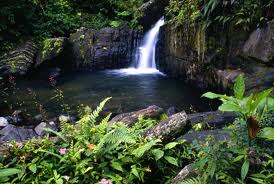
El Yunque, as it is affectionately called, sits nearest to the northeastern city of Rio Grande, is predominately within the Luquillo Mountains and covers approximately 28,000 acres of land. Despite its relatively small size, El Yunque has some truly impressive stats:
- Its namesake peak El Yunque is one of the highest points on the island
- It was considered a holy place by the island’s indigenous Taino Indians
- Houses over 100 different species of wildlife
- Contains more species of trees than all of the forests in the US Forest System combined
- Is home to more than 200 different species of trees and plants
- More than 300 of the rainforest’s plants are valued for their therapeutic or medicinal properties
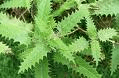 One medicinal plant with which you may be familiar is the Stinging Nettle or Ortiga Brava. Originally from the much colder regions of Europe and Asia, it is commonly found about the rainforest and known as a formidable shrub because of its tiny needle like hairs that, if touched, easily break off into the skin and release a poisonous liquid called Formic Acid. The stinging hairs are mostly found on the shrub’s twigs and lower leaves and usually only leave their victims with mild to severe skin irritations. If you should have a prickly run in with one, remove the needles as best you can, keep your hands away from your face, and wash them as quickly and thoroughly as possible.
Some other healthful constituents of the herb include chlorophyll, acetylcholine, histamine, Vitamins A and C, silicon, potassium, fiber and protein. Stinging nettle has been used for centuries to relieve or counteract a range of different physical ailments including:
- Increasing the flow of urine
- Expelling of mucus from the lungs and throat
- Constricting hemorrhages and inflammatory conditions
- Increasing the secretion of mother’s milk
- Alleviate early symptoms of benign prostate enlargement (BPH)
These actions within the body make Stinging Nettle beneficial for asthma, allergies, malnourishment, pain management, urinary conditions, internal bleeding and arthritis. Currently, research is being done on the herb’s impact on blood pressure, blood clotting and blood sugar. Consequently, caution should be used and medical clearance obtained before combining Stinging Nettle with pharmaceutical hypertension treatments, blood thinners or diabetes medications. Stinging Nettle should not be consumed by pregnant women or women trying to conceive.
Stinging Nettle supplements are made from the specific parts of the plant as well as the whole plant and available in tincture, powder and capsule forms. Use as directed on the product’s label and always inform your physician of any herbs included in your nutritional regime.
As we move into the week, I intend to carry Earth Day with me and reflect on the alluring beauty of our world. I know Puerto Rico is just one of many healing places we are blessed with, so please feel free to share some others with me.
Until next week, Be Wild and BeWell
Sources
http://www.medicine.nevada.edu/wps/Proceedings/45/20-22.pdf
http://www.fs.usda.gov/detail/elyunque/learning/nature-science/?cid=fsbdev3_043029
http://www.umm.edu/altmed/articles/stinging-nettle-000275.htm
Tierra, Michael, O.M.D. The Way of Herbs. Pocket Books, NY, NY. 1998
Related articles
- Protect El Yunque Rainforest from Corrosive Development (repeatingislands.com)
- The Wild Side of Puerto Rico: Rainforests and glowing waters (repeatingislands.com)

 BeWellWarrior